Cyber Threat Intelligence Software - Actionable Threat Intel for your Business
Threat Intelligence Dark Web Monitoring
What Is Cyber Threat Intelligence Software? You can’t monitor every dark web forum and criminal channel yourself. CTI …

Find the right external attack surface management tool for your security team’s environment and budget.
• EASM tools find exposed assets but can’t tell you what attackers already stole. Pair them with credential monitoring for full coverage.
• Match your tool to your environment: Microsoft shops benefit from Defender EASM, cloud-native teams from Wiz, and teams that need dark web credential monitoring from Breachsense.
• Credential abuse is still the top breach vector according to Verizon’s 2025 DBIR, not vulnerability exploitation. That’s the gap most EASM tools leave open.
• When your vendors get breached, your data gets exposed too. EASM tools only watch your assets, not your supply chain.
According to Enterprise Strategy Group, 76% of organizations experienced a cyberattack that started with an unknown or unmanaged internet-facing asset. Attackers find forgotten assets before you do.
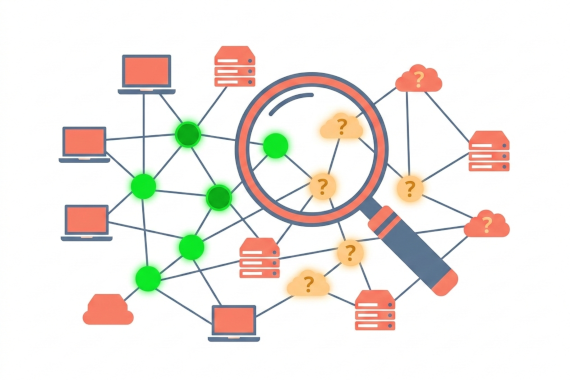
Here’s the problem. Most external attack surface management tools only find exposed assets. They tell you what’s visible to attackers. They don’t tell you what attackers already have, like passwords and session tokens circulating on dark web markets.
Breachsense EASM closes that gap by combining attack surface discovery with real-time dark web monitoring. You see what’s exposed and what’s already compromised.
This guide compares eight external attack surface management platforms to help you pick the right one. No vendor rankings. Just honest analysis of what each does well and where they fall short.
External attack surface management (EASM) tools continuously discover and monitor all internet-facing assets visible to attackers outside your network. These platforms automatically find forgotten subdomains, misconfigured cloud resources, and exposed APIs. They then prioritize risks so your security team can fix them before breaches occur.
According to Enterprise Strategy Group, 76% of organizations experienced a cyberattack that started with an unknown or unmanaged internet-facing asset. Traditional vulnerability scanners only check assets you already know about. EASM tools flip that approach. They start with your domain name and work outward, finding everything connected to your organization from the attacker’s perspective. That distinction matters when vulnerability exploitation now accounts for 20% of initial breach access, according to the 2025 Verizon Data Breach Investigations Report.
EASM tools handle four core functions. Discovery continuously finds assets across your external footprint. Classification sorts them by type and owner. Vulnerability assessment identifies weaknesses. Prioritization ranks what to fix first.
The challenge? These tools map your attack surface. They don’t tell you what’s already been compromised.
Before comparing platforms, establish what matters for your environment. Not every feature benefits every organization.
Asset Discovery Depth: How thoroughly does it find external assets? Some tools excel at cloud resources. Others focus on traditional infrastructure. Match discovery capabilities to your environment.
Risk Prioritization: Raw vulnerability counts don’t help. You need context. Does this exposure face the internet? Is it actively exploited? Does it connect to sensitive systems?
Integration Capabilities: EASM data needs to flow into your existing tools. SIEM and SOAR integration matters. If the tool creates another silo, you’ve added work instead of reducing it.
Cloud Coverage: Multi-cloud environments need multi-cloud visibility. AWS, Azure, and GCP deployments all require coverage from your external attack surface management tool.
False Positive Management: Alert fatigue kills EASM programs. The best tools reduce noise through validation and context, not just volume.
Credential Exposure Detection: Most EASM tools find exposed services but miss stolen credentials. Tools that combine asset discovery with dark web monitoring give you a more complete picture.
| Tool | Best For | Key Strength |
|---|---|---|
| Microsoft Defender EASM | Azure-heavy organizations | Native Microsoft security integration |
| Breachsense EASM | EASM + credential intelligence | Dark web monitoring + asset discovery |
| Palo Alto Cortex Xpanse | Large enterprises | Attacker-perspective discovery at scale |
| CrowdStrike Falcon Surface | Existing Falcon customers | Unified endpoint + EASM visibility |
| CyCognito | Zero-input discovery | Finds assets without seed data |
| Censys | Research-grade analysis | Internet-wide scanning data |
| Wiz | Cloud-native environments | Agentless multi-cloud coverage |
| Qualys EASM | Compliance-focused teams | VMDR integration for regulated industries |
Best for: Organizations heavily invested in Microsoft and Azure ecosystems.
Microsoft Defender EASM uses the infrastructure Microsoft built for its own threat intelligence to scan the entire internet. That gives it global reach and deep asset discovery.
Key Features:
Strengths: Native integration with Microsoft security tools makes it compelling for existing Microsoft shops. No additional vendor relationship required. Discovery capabilities benefit from Microsoft’s massive internet scanning infrastructure.
Considerations: Organizations not using Microsoft Sentinel or Defender XDR lose most of the integration value. Works best as part of a broader Microsoft security investment, not as a standalone external attack surface management tool.
Best for: Organizations wanting attack surface discovery combined with dark web intelligence and credential exposure monitoring.
Most EASM tools tell you what’s exposed. Breachsense EASM goes further by combining attack surface discovery with real-time dark web monitoring through a unified API.
Key Features:
Strengths: The combination of EASM and dark web intelligence fills gaps other tools ignore. API-first architecture integrates with existing security workflows. Real-time alerting catches credential exposure before attackers exploit it. Monitoring over 343 billion compromised credentials provides unmatched breach data coverage.
Considerations: Organizations wanting only traditional asset discovery without threat intelligence may find broader platforms sufficient. Best value comes from using both EASM and dark web monitoring capabilities together.
Best for: Large enterprises requiring continuous discovery across complex environments.
Cortex Xpanse originated from Expanse, one of the original EASM pioneers. Palo Alto acquired them and integrated the technology into the Cortex platform.
Key Features:
Strengths: The attacker-perspective approach means you see what adversaries see. Integration with Cortex XSOAR automates remediation workflows. Proven enterprise scale.
Considerations: Enterprise pricing puts it out of reach for mid-market organizations. Full value requires broader Palo Alto platform adoption.
Best for: Organizations wanting unified endpoint and attack surface visibility in one platform.
CrowdStrike built Falcon Surface to extend their endpoint visibility to external attack surfaces. The result combines their threat intelligence with asset discovery.
Key Features:
Strengths: If you already use Falcon for endpoint protection, adding Surface creates unified visibility. CrowdStrike’s threat intelligence adds context other EASM tools lack. Single vendor relationship simplifies procurement.
Considerations: Standalone value without Falcon endpoint is limited. Pricing assumes broader CrowdStrike adoption. Organizations using competing endpoint solutions get less integration benefit.
Best for: Organizations wanting full discovery without providing seed information.
CyCognito pioneered the “zero-input” approach to external attack surface management. Point it at your organization, and it discovers your entire attack surface without seed lists or IP ranges.
Key Features:
Strengths: The discovery approach finds assets other tools miss. Attacker perspective surfaces real risks. Business context helps prioritize by operational impact, not just technical severity.
Considerations: Premium pricing reflects specialized capabilities. Discovery thoroughness means longer initial scan times.
Best for: Organizations needing research-grade internet scanning data and flexible analysis.
Censys emerged from academic research into internet-wide scanning. Their data powers many threat intelligence platforms and security research projects.
Key Features:
Strengths: Research-grade data quality exceeds most commercial alternatives. Flexible query capabilities support custom analysis. Certificate monitoring catches exposure before exploitation.
Considerations: Raw data requires analysis expertise to extract value. User interface trails more polished commercial tools. Less hand-holding for teams wanting turnkey solutions.
Best for: Cloud-native organizations needing code-to-cloud visibility across multi-cloud environments.
Wiz took the cloud security market by storm with agentless scanning and unified cloud visibility. Their EASM capabilities focus on cloud infrastructure.
Key Features:
Strengths: Cloud-native architecture means superior coverage for modern infrastructure. Attack path analysis shows which exposures actually reach sensitive resources. Rapid deployment without agents or network changes.
Considerations: Limited visibility into traditional on-premises infrastructure. Organizations with large on-premises footprints need complementary solutions.
Best for: Compliance-focused organizations with existing Qualys VMDR deployments.
Qualys added external attack surface management to their vulnerability management platform. The integration creates unified visibility for organizations already using VMDR.
Key Features:
Strengths: Existing Qualys customers gain external visibility without new vendor relationships. Strong compliance reporting for regulated industries. Proven enterprise scale.
Considerations: Discovery capabilities trail specialized EASM vendors. Best value assumes existing Qualys investment.
Your employees’ credentials could be for sale right now. You’d never know from an EASM dashboard alone.
Credential exposure monitoring tracks stolen passwords and session tokens circulating on dark web markets and hacker forums. Unlike EASM tools that find exposed assets, credential monitoring finds exposed access, catching stolen login data from infostealer malware and data breaches.
EASM tools find your vulnerable assets. They tell you what’s exposed. They don’t tell you what attackers already stole.
Attackers don’t just look for vulnerabilities. They look for shortcuts. Stolen credentials let them walk through the front door. Session tokens bypass MFA entirely. Leaked API keys grant access without exploitation.
The 2025 Verizon Data Breach Investigations Report shows 20% of breaches started with vulnerability exploitation. But credential abuse remains the top initial access method. EASM tools address the first problem. They ignore the second.
Here’s what’s missing from pure EASM approaches:
Credential exposure monitoring: Your employees’ passwords are probably already leaked. Infostealer malware harvests credentials daily. Combo lists circulate on dark web forums. EASM tools don’t watch for this.
Dark web intelligence: Initial access brokers sell network access on dark web markets. Ransomware gangs post stolen data to leak sites. EASM tools don’t collect any of this.
Stolen session tokens: Modern infostealers grab browser session tokens, not just passwords. These tokens bypass authentication entirely. EASM tools can’t detect token theft.
Third-party breach exposure: When your vendors get breached, your data gets exposed. EASM tools watch your assets. They don’t watch your vendors'.
Complete visibility requires both. EASM tools show what’s exposed. Dark web monitoring shows what’s already stolen. Credential exposure detection catches leaked passwords before attackers use them.
Define scope first. What domains do you own? What IP ranges? What cloud accounts? Start with known assets, then let discovery expand your view.
Establish asset ownership. Discovery finds assets. Someone needs to own remediation. Map assets to business units before findings overwhelm your team.
Integrate with existing workflows. EASM findings need to flow into your vulnerability management and ticketing systems. Isolated tools create isolated data.
Complement with threat intelligence. Asset discovery alone misses stolen credentials. Add credential monitoring and dark web intelligence to see the complete picture.
External attack surface management tools solve a real problem. You can’t protect assets you don’t know about. These eight platforms help security teams discover and monitor internet-facing exposures.
But EASM alone won’t give you complete visibility. Most breaches start with stolen credentials, not unpatched vulnerabilities. EASM tools don’t cover that.
Match your tool to your environment. If you’re already on Microsoft, Defender EASM plugs right in. Large enterprises benefit from Cortex Xpanse’s scale. Cloud-native organizations should evaluate Wiz. Organizations wanting EASM combined with dark web intelligence should evaluate Breachsense.
Then fill the gaps. Your external attack surface extends beyond what scanners find. It includes every leaked credential and third-party vendor breach that affects your organization. Check your dark web exposure to see what attackers already know about you.
An EASM tool continuously discovers and monitors all your internet-facing assets that attackers could exploit. It finds forgotten servers, shadow IT, and misconfigured cloud resources. The tool maps these automatically and prioritizes what to fix first. For complete visibility, combine EASM with dark web monitoring to detect stolen credentials from those assets.
It depends on your environment. Microsoft Defender EASM works best for Azure-heavy organizations. Cortex Xpanse suits large enterprises needing broad coverage. CyCognito excels at zero-input discovery. Wiz dominates cloud-native environments. For EASM combined with credential exposure intelligence, Breachsense adds dark web monitoring that other tools don’t offer.
ASM covers all attack surfaces including internal assets behind your firewall. EASM focuses specifically on external, internet-facing assets visible to attackers. EASM shows you what attackers see from outside your network. Most organizations start with EASM since external assets face the highest risk from opportunistic scanning and automated exploitation.
Enterprise EASM platforms typically run $50,000 to $500,000+ annually depending on asset count and features. Mid-market solutions start around $10,000 to $50,000. Pricing usually scales with the number of assets monitored or domains tracked. Some vendors like Microsoft bundle EASM with broader security platform licensing.
Your internal attack surface includes assets within your corporate network that attackers target after breaching the perimeter, like servers and databases. Your external attack surface includes internet-facing assets visible to anyone online, such as websites and cloud services. External attack surface management focuses on reducing vulnerabilities that outside threats can exploit, while internal security secures assets from lateral movement after initial access.
You can’t protect what you don’t know exists. With cloud services and remote work, you’re creating new digital assets faster than ever and often losing track of them. Attackers constantly scan for forgotten assets like old dev servers and misconfigured cloud storage. Credential abuse remains the top breach vector according to Verizon’s 2025 DBIR. Attack surface management helps you find those exposed assets before attackers do.
Threat Intelligence Dark Web Monitoring
What Is Cyber Threat Intelligence Software? You can’t monitor every dark web forum and criminal channel yourself. CTI …

Ransomware Monitoring Dark Web Monitoring Threat Intelligence Credential Monitoring
What Is Ransomware Monitoring? You’ll see “ransomware monitoring” used loosely across vendor marketing. Here’s what it …