Find exposed employee passwords in stealer logs and dark web markets before attackers exploit them.
• Dark web credential monitoring tools scan stealer logs, criminal forums, and third-party breaches for your organization’s exposed passwords.
• The best tools offer API access, real-time alerting, and coverage of stealer log channels where fresh credentials appear first.
• Stolen credentials can be exploited within hours. Early detection enables password resets before attackers strike.
• Choose Breachsense for full coverage, Have I Been Pwned for free third-party breach checks, or ID Agent for MSP multi-tenant needs.
Your employees’ passwords are already circulating on criminal marketplaces. IBM X-Force 2025 reports an 84% increase in phishing emails delivering infostealers. These infections harvest credentials from browsers and sell them within hours.
Dark web monitoring tools detect exposed credentials before attackers exploit them. But not all tools are equal. Some only check third-party breaches. Others add stealer logs, dark web markets, and criminal forums where fresh credentials first appear.
Security teams need tools that cover third-party breaches, combo lists, and stealer logs to catch password reuse and fresh exposures.
This guide compares 10 credential monitoring tools, from enterprise platforms with deep stealer coverage to free services for basic breach checks.
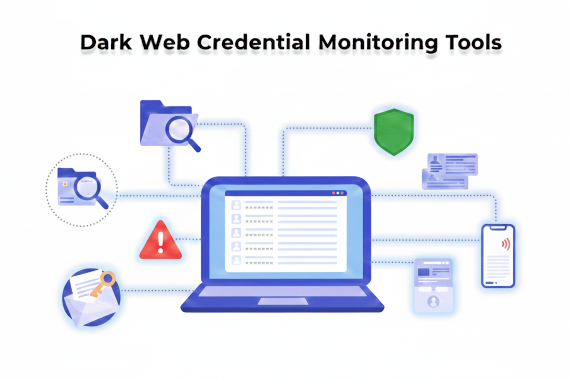
Dark web monitoring tools scan criminal sources for exposed passwords linked to your organization. These darknet monitoring solutions search stealer log channels, dark web markets, threat actor forums, combo lists, and third-party breaches for credentials that attackers could use against you.
Dark web credential monitoring is the automated process of scanning stealer log channels, dark web markets, combo lists, criminal forums, and third-party breaches for exposed usernames and passwords associated with your organization’s domains. When matches are found, security teams receive alerts to reset compromised credentials before attackers exploit them.
The difference between tools comes down to coverage and speed. Basic services only check third-party breaches. Enterprise platforms add stealer logs, dark web markets, and criminal forums where fresh credentials appear first.
Key capabilities to evaluate:
- Stealer log monitoring (LummaC2, RedLine, Vidar, Raccoon)
- Real-time alerting via webhook or email
- API access for automation
- Password cracking (hashed to plaintext)
- Domain monitoring for your organization
Why Stealer Log Coverage Matters?
Not all credential sources are equal. Understanding where leaked passwords originate helps you evaluate which tools provide meaningful coverage.
Infostealer malware is the fastest-growing credential source. When an employee’s device gets infected, the malware harvests every password saved in their browser and captures credentials as they type. Within hours, those credentials appear on criminal marketplaces.
Major infostealers (LummaC2, RedLine, Vidar, Raccoon) all harvest browser passwords, cookies, credit card details, and cryptocurrency wallet addresses. They differ mainly in distribution methods and malware-as-a-service pricing, but the credential data they steal is similar.
Why this matters for tool selection: Tools that only monitor third-party breaches miss stealer logs entirely. By the time stealer credentials appear in combo lists, attackers have had weeks or months to exploit them. Real-time stealer log monitoring catches credentials while they’re still fresh.
1. Breachsense
Breachsense provides an API-first platform built for security teams who need deep credential coverage and automation capabilities.
Core strengths:
- Real-time monitoring of stealer logs, including LummaC2, RedLine, Vidar, and Raccoon
- Credential data from third-party breaches, criminal marketplaces, and ransomware leak sites
- Lookalike domain monitoring for typosquatting and homoglyph attacks
- Password cracking for hashed credentials
- RESTful API for SIEM integration
- Webhook alerts for automated response
The platform indexes infostealer channels where fresh credentials appear within hours of device infection. This speed advantage matters because attackers also monitor these sources.
Best for: Enterprise security teams, penetration testers, red teams, and MSPs who need API-driven automation.
2. SpyCloud
SpyCloud focuses on account takeover prevention. The platform emphasizes post-infection remediation, helping organizations identify compromised devices.
Core strengths:
- Account takeover prevention focus
- Post-infection remediation workflows
- Enterprise integration options
- Compromised device identification
SpyCloud’s approach ties credential detection to device remediation, guiding security teams through cleanup when employee credentials appear in stealer logs.
Best for: Large enterprises focused on account takeover prevention and post-infection cleanup.
3. Flare
Flare provides threat intelligence with dark web coverage. The platform positions itself as a comprehensive dark web monitoring solution.
Core strengths:
- Dark web source coverage
- Threat intelligence capabilities
- Real-time alerting
- API integration
Flare’s strength is combining credential monitoring with broader threat intelligence, giving security teams context about threat actors and attack campaigns alongside exposed credentials.
Best for: Threat intelligence teams who need broad dark web visibility beyond just credentials.
4. ZeroFox
ZeroFox specializes in digital risk protection, combining dark web monitoring with social media threat detection and brand protection.
Core strengths:
- Social media threat detection
- Phishing domain monitoring
- Takedown services
- Executive protection
Credential monitoring is one component of a broader platform. ZeroFox suits organizations that need brand protection alongside credential monitoring.
Best for: Organizations with significant social media presence and brand protection needs.
5. Recorded Future
Recorded Future offers enterprise-grade threat intelligence with credential monitoring as part of a broader platform. Machine learning processes vast data volumes to prioritize threats.
Core strengths:
- Massive threat intelligence dataset
- Machine learning analysis
- Integration ecosystem
- Strategic intelligence reporting
The platform requires dedicated analyst resources to maximize value. Credential monitoring is one capability among many.
Best for: Large enterprises with dedicated threat intelligence teams.
6. Flashpoint
Flashpoint provides business risk intelligence derived from dark web research. The platform emphasizes human intelligence and analyst expertise alongside automated collection.
Core strengths:
- Deep criminal forum access
- Threat actor profiling
- Geopolitical intelligence
- Fraud intelligence
Flashpoint’s strength is contextualized intelligence, adding analyst insights about threat actor intent to raw credential data.
Best for: Financial institutions, government agencies, and organizations facing targeted threats.
7. HackNotice
HackNotice offers threat intelligence focused on breach awareness and security training. The platform provides alerts when organization data appears in breaches.
Core strengths:
- Breach notification alerts
- Security awareness integration
- Affordable pricing
- Simple setup
HackNotice doesn’t monitor stealer logs or private forums. Coverage focuses on third-party breach data and news monitoring.
Best for: SMBs and organizations that need basic breach awareness without enterprise complexity.
8. Have I Been Pwned
Have I Been Pwned provides free breach checking for individuals and paid API access for organizations. Troy Hunt’s database contains billions of exposed credentials from third-party breaches.
Core strengths:
- Free individual lookups
- Massive collection of third-party breach data
- API for domain searching
- Notification service
HIBP covers third-party breaches only. It doesn’t monitor stealer logs, private forums, or dark web markets. Use it as a baseline, not a complete solution.
Best for: Individuals and organizations that need free or low-cost breach checking. Combine with stealer-focused tools for complete coverage.
9. ID Agent
ID Agent targets MSPs with white-label dark web monitoring services. The platform integrates with MSP tools and supports multi-tenant management.
Core strengths:
- MSP-focused platform
- White-label capabilities
- PSA/RMM integrations
- Security awareness training
ID Agent focuses on dark web monitoring for MSPs serving SMB clients.
Best for: Managed service providers serving SMB clients who need bundled monitoring with training.
10. Constella Intelligence
Constella Intelligence provides identity monitoring and fraud detection services. The platform helps organizations protect employees and customers from identity-based attacks.
Core strengths:
- Identity exposure monitoring
- Fraud detection
- Executive protection
- Consumer identity services
Constella bridges enterprise security and consumer identity protection. The platform suits organizations that need to protect both corporate credentials and individual employee identities.
Best for: Organizations with identity protection requirements for executives and employees.
Credential monitoring coverage refers to the sources a dark web monitoring service scans for exposed passwords. Basic tools cover third-party breaches only. Deep coverage adds stealer logs, combo lists, dark web markets, and criminal forums where fresh credentials appear.
Match the tool to your primary use case:
For API-driven automation:
Choose Breachsense or SpyCloud. Both offer RESTful APIs that integrate with SIEM, SOAR, and custom security workflows. Breachsense emphasizes developer experience with clean API design.
For MSP multi-tenant needs:
ID Agent and Breachsense support MSP workflows. ID Agent focuses on SMB clients with training integration. Breachsense offers deeper coverage for MSPs serving enterprises.
For comprehensive threat intelligence:
Recorded Future and Flashpoint provide credential monitoring within broader threat intelligence platforms. These require dedicated analyst teams to maximize value.
For basic breach checking:
Have I Been Pwned offers free and affordable options. Combine with a stealer-focused tool for complete coverage.
For brand protection plus credentials:
ZeroFox combines credential monitoring with social media and domain protection. Choose this if brand threats are as important as credential exposure.
What Features Matter Most?
When evaluating enterprise dark web monitoring tools, focus on capabilities that directly impact detection speed and response effectiveness.
Stealer log coverage: Fresh credentials appear in stealer log channels before anywhere else. Tools without stealer coverage miss the most time-sensitive exposures. Look for coverage of major dark web markets and direct infostealer Telegram channel monitoring. The gap between stealer log detection and third-party breach detection can be weeks or months.
Alert speed: Detection means nothing without fast alerting. Look for webhook delivery and real-time email alerts. The best tools send alerts within minutes of credential detection. Ask vendors about their average time from data collection to alert delivery.
API access: Security teams automate credential resets through APIs. Dashboard-only tools create manual bottlenecks when credentials need immediate action. Evaluate API documentation quality, rate limits, and response formats. A clean REST API with JSON responses integrates faster than proprietary formats.
Password cracking: Many third-party breaches contain hashed passwords rather than plaintext. Tools that crack hashes to plaintext let you verify exact credential exposure. Knowing the actual password helps identify password reuse across accounts and verify whether the credential is still active.
Historical data: Attackers use old credentials for credential stuffing attacks. Historical breach coverage catches password reuse from years-old exposures.
Session token monitoring: Advanced tools monitor for stolen session cookies, not just passwords. Infostealers capture browser cookies that attackers use to bypass MFA entirely.
How to Implement Credential Monitoring?
Start with your highest-value assets and expand coverage over time. A phased rollout prevents alert fatigue while building organizational response capability.
Phase 1: Domain monitoring
Configure monitoring for your primary email domains. This catches the majority of employee credential exposures immediately. Most organizations see initial results within 24 hours as the platform returns historical matches.
Phase 2: Executive accounts
Add specific monitoring for executive email addresses. These accounts face targeted attacks and warrant individual attention. C-suite credentials command premium prices on criminal markets because they enable business email compromise and impersonation attacks.
Phase 3: API integration
Connect credential alerts to your SIEM or ticketing system. Automate the workflow from detection to password reset. This is where tool selection pays off. A well-documented API makes integration straightforward.
Phase 4: Vendor domains
Extend monitoring to critical vendor domains. Third-party credential exposures can cascade into your network through supply chain attacks. Start with vendors who have network access or handle sensitive data.
SIEM Integration Examples
Modern credential monitoring tools deliver alerts via webhooks that integrate directly with security platforms:
Splunk integration:
Configure a webhook endpoint in Splunk HTTP Event Collector. Credential alerts arrive as JSON events that trigger automated playbooks. Create correlation rules that match exposed credentials against active user sessions.
Microsoft Sentinel:
Use Logic Apps to receive webhook payloads and create incidents automatically. Enrich alerts with Microsoft Entra ID data to identify affected user accounts and their access levels.
Elastic Security:
Ingest credential alerts through Logstash or the Elastic HTTP input. Build detection rules that correlate exposed credentials with authentication logs to identify potential account takeover.
Custom SOAR workflows:
Most SOAR platforms accept webhook triggers. Build playbooks that automatically disable affected accounts, force password resets, and create tickets for security review.
Response Workflow
When credentials surface, execute this response sequence:
- Verify the exposure - Confirm the credential matches an active account and assess the password’s current validity
- Force password reset - Immediately reset the affected password through your identity provider
- Terminate active sessions - Kill any existing sessions for the compromised account to prevent continued access
- Review authentication logs - Check for signs of unauthorized access between exposure and detection
- Remediate infected devices - If the credential came from stealer logs, identify and isolate the infected endpoint
- Escalate if needed - If unauthorized access occurred, escalate to full incident response to check for lateral movement and data exfiltration
Speed matters at every step. The window between credential exposure and exploitation is shrinking as attackers automate their operations.
Conclusion
Dark web credential monitoring tools vary dramatically in coverage and capability. The right choice depends on your security maturity and use case.
Key takeaways:
- Stealer log coverage is critical. Infostealers deliver fresh credentials within hours. Tools monitoring only third-party breaches miss this window.
- API access enables automation. Manual dashboard workflows don’t scale when attackers move fast.
- Combine tools strategically. Free services like HIBP cover third-party breaches only. Enterprise tools cover everything: third-party breaches, stealer logs, dark web markets, and criminal forums.
- Speed matters. Detection without fast alerting leaves credentials exposed.
For security teams, Breachsense offers the combination of deep stealer coverage, developer-friendly API, and real-time alerting that credential monitoring requires. See what’s already exposed about your organization with a free dark web scan.
Dark Web Credential Monitoring Tools FAQ
Dark web credential monitoring continuously scans criminal marketplaces, stealer log channels, and third-party breaches for exposed usernames and passwords linked to your organization. When employee credentials appear in these sources, you get an alert so you can reset passwords before attackers use them for account takeover or lateral movement.
Three main paths: infostealer malware infects employee devices and harvests saved browser passwords, third-party services your employees use get breached, or phishing attacks trick employees into entering credentials on fake login pages. Infostealers are the fastest-growing source, capturing fresh passwords within hours of infection.
Act immediately. Force a password reset for affected accounts. Terminate active sessions. Check authentication logs for signs of unauthorized access. If the credential came from a stealer log, the infected device needs isolation and remediation. Enable MFA if not already active.
Continuous, real-time monitoring is ideal. Credentials can be exploited within hours of appearing on criminal markets. Monthly or quarterly manual checks leave dangerous gaps. Choose a tool that provides automated alerting when your organization’s credentials surface.
Password managers store and generate secure passwords. Dark web monitoring detects when those passwords get leaked through breaches or malware. They solve different problems and work best together. Some password managers include basic breach checking, but enterprise tools provide deeper coverage of stealer logs and private forums.
Dark web monitoring is detection, not prevention. But prevention tools aren’t perfect. Infostealers bypass endpoint security, phishing gets through email filters, and third-party services get breached. Monitoring catches what prevention misses, giving you time to reset exposed passwords before attackers exploit them.