
Detect and Prevent Dark Web Credit Card Fraud
Dark Web Monitoring Credit Card Fraud
What Is Dark Web Credit Card Fraud? Dark web credit card fraud is the theft and sale of stolen payment card data through …

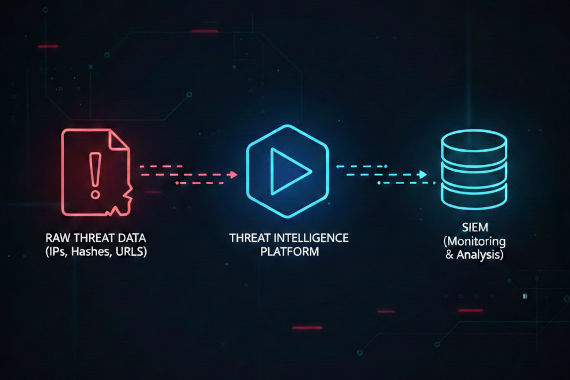

Learn how to evaluate threat intelligence feeds based on IOC freshness and integration with your security stack.
• Threat intelligence feeds provide IOCs like malicious IPs and domains that your security tools use to detect and block threats
• Open source feeds offer solid baseline coverage but require manual curation and may lack the freshness of commercial alternatives
• Commercial feeds provide faster updates and better context but cost tens of thousands annually
• The best approach combines multiple feed types based on your threat model and integrates them through a TIP or directly into your SIEM
Your firewall blocks known malicious IPs. Your SIEM correlates logs against threat indicators. Your EDR quarantines files matching known malware hashes. But where do those indicators actually come from?
Threat intelligence feeds are the data streams that power your security tools. According to the SANS 2025 CTI Survey, 62% of organizations struggle to make threat intelligence actionable. The problem often starts with feed selection.
Too many feeds create alert fatigue. Too few leave blind spots. The wrong feeds generate false positives that waste analyst time. Good feeds give your tools fresh indicators they can block automatically.
This guide covers the best threat intelligence feeds available today, from free open source options to commercial feeds.
Threat intelligence feeds are the foundation of automated threat detection. They provide the indicators your security tools use to identify and block malicious activity.
Security teams often conflate feeds with platforms. They’re different things that serve different purposes.
Threat intelligence feeds are continuous data streams containing indicators of compromise like malicious IP addresses and domains. Your security tools ingest these feeds to detect and block known threats automatically. Feeds range from free community lists to commercial services with real-time updates.
Feeds provide raw data. They tell you that a specific IP address is associated with command-and-control infrastructure. Or that a particular file hash matches known ransomware. Your SIEM and firewall consume this data to make blocking decisions.
Threat intelligence platforms do something different. They aggregate multiple feeds and deduplicate indicators. They add context and help analysts prioritize what matters. You can use feeds directly or route them through a platform for better management.
The threat intelligence lifecycle describes how organizations collect and act on this data. Feeds are just one input into that process.
Not all feeds are created equal. The difference between a high-quality feed and a poor one can mean the difference between catching an attack and missing it entirely.
Freshness determines effectiveness. Attackers rotate infrastructure constantly. An IP address used for C2 today might be abandoned tomorrow. The best feeds update in near real-time.
False positives drain your SOC. Low-quality feeds include stale indicators and legitimate domains incorrectly flagged as malicious. Every bad alert pulls attention from real threats.
Context helps you prioritize. Knowing that an IP is “malicious” isn’t enough. You need to know what campaign it’s associated with and what the attacker is after. Feeds with rich context help you prioritize response.
Source attribution builds confidence. You should know where each indicator came from. Was it observed in active attacks? Reported by a security researcher? Extracted from malware analysis? Source transparency helps you weight indicators appropriately.
Feeds vary by indicator type and update frequency. Different feeds serve different use cases.
Indicators of compromise (IOCs) are forensic artifacts that identify malicious activity. Common IOC types include IP addresses and domain names. File hashes are another key type. Your security tools match these against network traffic to detect threats.
IP reputation feeds track malicious IP addresses used for scanning and C2 communication. These integrate directly with firewalls for automated blocking.
Domain feeds identify malicious domains used for phishing and C2. They’re essential for DNS-based security controls.
Hash feeds provide file hashes for known malware. Your EDR and antivirus tools use these to identify malicious files without behavioral analysis.
URL feeds flag specific URLs hosting malware or phishing content. They’re more granular than domain feeds since a single domain might host both legitimate and malicious content.
Vulnerability feeds track newly disclosed CVEs and flag when exploit code is publicly available. These help you prioritize patching.
Credential feeds monitor for your organization’s leaked credentials appearing in breaches and stealer logs. Breachsense provides this type of intelligence, alerting you when employee passwords surface on dark web markets.
Open source feeds provide solid baseline coverage at no cost. They’re community-maintained and widely used.
AlienVault OTX is one of the largest open threat intelligence communities. Users contribute and consume threat data collaboratively.
Strengths:
Limitations:
Best For: Security teams wanting broad community intelligence with API access.
Abuse.ch operates several specialized feeds focused on specific threat types. Each feed has a narrow focus but deep coverage in its domain.
Available Feeds:
Strengths:
Limitations:
Best For: Teams wanting specialized, high-quality feeds for specific threat types.
CISA maintains a catalog of vulnerabilities actively exploited in the wild. This isn’t an IOC feed in the traditional sense, but it’s essential for prioritizing patches.
Strengths:
Limitations:
Best For: Any organization prioritizing vulnerability management.
Spamhaus operates several DNS-based blocklists focused on spam and malware. Their data is widely used by email providers and security tools.
Available Lists:
Strengths:
Limitations:
Best For: Organizations needing email security intelligence.
MISP includes default feeds from various sources that you can enable with a click. These aggregate multiple community sources.
Strengths:
Limitations:
Best For: Organizations already using MISP as their TIP.
Commercial feeds offer faster updates and better context. They’re worth the cost if you need faster updates or context that free feeds don’t provide.
Recorded Future provides machine learning-analyzed threat intelligence from a large collection of sources including dark web forums.
Strengths:
Limitations:
Best For: Large enterprises with dedicated threat intelligence teams.
CrowdStrike’s threat intelligence integrates tightly with their endpoint platform. Their adversary tracking is industry-leading.
Strengths:
Limitations:
Best For: CrowdStrike customers wanting integrated intelligence.
Mandiant provides intelligence backed by their incident response expertise. Their nation-state coverage is particularly strong.
Strengths:
Limitations:
Best For: Government agencies and critical infrastructure operators.
Flashpoint specializes in dark web intelligence and adversary tracking. Their human analysts infiltrate criminal communities.
Strengths:
Limitations:
Best For: Financial services and organizations facing fraud threats.
GreyNoise takes a unique approach by identifying benign internet scanners. This helps reduce false positives from security research and legitimate scanning.
Strengths:
Limitations:
Best For: SOC teams drowning in alerts from internet scanners.
Breachsense monitors dark web markets and stealer logs for your organization’s exposed credentials. Unlike traditional IOC feeds that focus on network indicators, credential feeds alert you when employee passwords surface so you can reset them before attackers use them.
Strengths:
Limitations:
Best For: Security teams wanting to detect exposed credentials and search leaked files for sensitive data.
Before committing to any feed, run it through a structured evaluation.
Test against known indicators. Take IOCs from recent incidents your team investigated. Does the feed contain them? How quickly did they appear after the incident became public?
Measure false positive rates. Run the feed against your environment for a week. How many alerts turn out to be legitimate traffic? A feed generating constant false positives isn’t worth the analyst time.
Check update frequency. How often does the feed refresh? For IP and domain feeds, anything less than daily updates means stale data. The best feeds update hourly or in near real-time.
Evaluate context quality. Pick random indicators and examine the metadata. Does the feed tell you why something is malicious? What campaign it’s part of? When it was observed? More context means better decisions.
Assess format compatibility. Does the feed support STIX/TAXII? Can your SIEM ingest it natively? Integration friction adds ongoing operational cost.
Getting feeds into your tools is only half the battle. You need a strategy for managing them.
Use a threat intelligence platform. A TIP like MISP or OpenCTI aggregates multiple feeds and normalizes formats. This reduces the integration burden on your SIEM.
Set confidence thresholds. Not all indicators deserve the same response. High-confidence indicators might trigger automatic blocking. Lower-confidence indicators might just create alerts for analyst review.
Implement aging policies. IOCs go stale. An IP address that was malicious six months ago might be legitimate now. Configure your tools to age out old indicators automatically.
Monitor feed health. Feeds go offline. Sources change formats. Set up monitoring to alert you when feeds stop updating or start producing errors.
Tune for your environment. Every organization has false positive sources specific to their traffic patterns. Build suppression rules for indicators that consistently trigger on legitimate activity.
Traditional IOC feeds focus on network indicators. But stolen credentials cause nearly a third of all breaches. Credential intelligence is a different category that deserves attention.
Dark web monitoring detects when your employees’ credentials appear in breaches and stealer logs. This isn’t about blocking network traffic. It’s about knowing which passwords need immediate reset.
Breachsense provides this intelligence through an API-first platform that monitors stealer logs and ransomware leak sites. When your data surfaces, you get alerted in real-time so you can reset credentials before attackers exploit them.
This complements traditional IOC feeds. Network indicators help you block malicious traffic. Credential intelligence helps you remediate compromised access.
Threat intelligence feeds power your automated defenses. Good feeds give your tools fresh indicators to act on. The wrong feeds generate noise that buries real threats.
Pick a few quality feeds that match your environment rather than subscribing to everything. Open source feeds like AlienVault OTX and Abuse.ch provide solid baseline coverage. Add commercial feeds if you need faster updates or coverage specific to your industry.
Use a threat intelligence platform to aggregate and normalize multiple feeds. Set confidence thresholds so your tools respond appropriately to different indicator quality levels. Implement aging policies so stale indicators don’t clutter your blocklists.
Key Takeaways:
Want to add credential intelligence to your threat detection? Book a demo to see how Breachsense monitors dark web markets for your organization’s leaked credentials.
A threat intelligence feed is a continuous stream of IOCs like malicious IP addresses and domain names. Your security tools ingest these feeds to detect and block known threats automatically. Feeds range from free community lists to commercial services with real-time updates.
Feeds provide raw indicator data. Threat intelligence platforms aggregate multiple feeds and deduplicate indicators. They help you operationalize the intelligence. You can use feeds directly in your SIEM or route them through a TIP.
Start with 2-3 high-quality feeds aligned to your threat model. More feeds mean more false positives and management overhead. Focus on feed quality over quantity. A single well-curated feed often outperforms a dozen poorly maintained ones.
Free feeds provide solid baseline coverage but have limitations. They’re often slower to update and require manual curation. Many enterprises combine free feeds for broad coverage with commercial feeds for faster updates on threats specific to their industry.
Most SIEMs support STIX/TAXII protocols for automated feed ingestion. You can also use APIs to pull indicators directly. The key is normalization since different feeds use different formats. A threat intelligence platform can handle this translation layer.
High-quality feeds have low false positive rates and continous updates. They provide clear source attribution and contextual enrichment. You should know not just that an IP is malicious, but why it’s malicious and what campaign it’s associated with.
Dark Web Monitoring Credit Card Fraud
What Is Dark Web Credit Card Fraud? Dark web credit card fraud is the theft and sale of stolen payment card data through …

Dark Web Monitoring Identity Theft
What Kind of Data Ends Up on the Dark Web? When your company’s data appears on the dark web, it usually falls into a few …