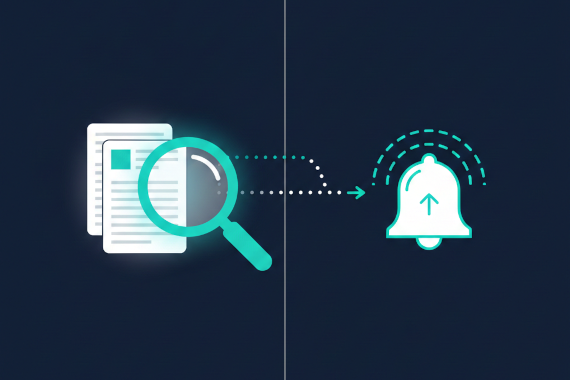
Learn when automated detection is a better fit than DarkOwl’s data exploration approach.
• DarkOwl is a dark web research tool built for analysts who want to explore and investigate darknet content
• Teams look for alternatives when they need automated credential alerts, not a search interface
• Breachsense automates credential detection with real-time alerts and password cracking
• DarkOwl fits best when you have a dedicated intel team. Breachsense fits when you need detection without research overhead
DarkOwl built their platform for research. They give you access to one of the largest commercial darknet archives and let your analysts explore it through Vision UI and APIs.
That’s powerful if you have a dedicated threat intelligence team. But most security teams don’t have analysts who spend their days searching darknet data.
If you need automated alerts when your credentials are exposed, not a research tool for exploring the dark web, you’re looking for a different kind of platform.
This page covers where DarkOwl fits and where automated tools like Breachsense work better.
What Does DarkOwl Do Well?
DarkOwl is a darknet data platform. They collect content from across the dark web and make it searchable through their Vision UI interface and APIs.
Darknet intelligence (DARKINT) is data collected from dark web sources like Tor hidden services and hacker forums. You can’t access these networks with regular search engines. You’d use DARKINT to track criminal activity and support your investigations.
DarkOwl’s core strengths:
Massive data archive. DarkOwl maintains one of the largest commercial darknet databases. They pull from dark web networks and hacker forums alongside messaging channels. Their 5+ year historical archive helps with forensic investigations and tracking long-term criminal activity.
Powerful search interface. Vision UI supports Boolean and regex queries with filters for network type and entity type. It covers 47 languages with natural language processing for categorization.
Investigation-focused tools. Features like “Direct to Darknet” let analysts pivot from search results to the actual dark web for deeper investigation. Their DARKINT Lexicon helps identify marketplaces and criminal groups.
Data licensing. DarkOwl offers data feeds and API access for organizations building products on top of darknet data. Threat intelligence vendors and data providers use this to power their own platforms.
Market monitoring. Their DarkMart database tracks 81 darknet marketplaces with over 387,000 listings and 16,000 vendors. You can analyze marketplace trends and vendor activity.
DarkOwl serves threat researchers and intelligence analysts well. Law enforcement and national security agencies are among their customers. If your team does darknet research, DarkOwl gives them powerful tools.
Why Do Teams Look for DarkOwl Alternatives?
DarkOwl handles darknet investigation well. But a few common needs push teams toward monitoring tools that do it for you.
You Don’t Have a Dedicated Threat Intelligence Team
DarkOwl assumes you have analysts who will build queries and investigate findings. That works for organizations with dedicated TI teams. Most security teams don’t have that luxury.
If your security team wears multiple hats, spending hours exploring darknet data isn’t realistic. You need a tool that watches for your credentials and alerts you when something appears. No manual hunting required.
The 2025 Verizon DBIR found that stolen credentials were involved in 88% of basic web application breaches. You can’t afford to miss leaked credentials because nobody had time to search for them.
You Need Automated Alerts in Your SIEM
DarkOwl provides APIs, but it’s designed around a research interface. Building automated alerting workflows on top of DarkOwl requires development work.
If you need credential alerts flowing into your SIEM or ticketing system today, an API-first tool gets you there faster. Breachsense’s webhooks push alerts directly to your existing tools without custom integration work.
Time to value matters. Exploration platforms take weeks or months to deploy and customize. Detection tools that do the work for you can be live in hours.
Stealer logs are files collected by infostealer malware from infected devices. They contain saved passwords and active session tokens. Attackers sell these logs on hacker forums and Telegram channels. A single stealer log can give an attacker access to dozens of accounts.
You Need to Search Leaked Documents
When ransomware groups dump files from a breached company, those files contain more than credentials. Internal documents and financial records end up in those leaks.
DarkOwl focuses on collecting and cataloging darknet content, but deep document search isn’t their strength. Breachsense goes further by indexing full files from ransomware dumps. You can run keyword searches across leaked content and spot exposed contracts or sensitive records tied to your company.
This matters for third-party risk monitoring. Your data can appear in someone else’s breach even if your own systems weren’t touched.
How Does Breachsense Compare to DarkOwl?
DarkOwl gives you data to explore. Breachsense monitors your assets and alerts you when threats appear. Different tools for different jobs.
| Capability | DarkOwl | Breachsense |
|---|
| Primary approach | Data exploration | Automated detection |
| Time to value | Requires analyst setup | Hours |
| Credential monitoring | Manual search | Automated alerts |
| Session token detection | Via data search | Built-in |
| Password cracking | Not offered | Included |
| Full-text document search | Limited | Built-in |
| Stealer log coverage | Yes | Yes |
| API access | Yes | Yes (API-first) |
| Real-time alerting | Manual setup | Built-in webhooks |
| Attack surface management | Limited | Built-in |
| Domain takedowns | Not offered | Included |
| Research tools | Advanced (Vision UI) | Not offered |
| Historical archive | 5+ years | Extensive |
| I2P monitoring | Yes | No |
| Data licensing | Yes | Yes |
For a full feature comparison, see Breachsense vs DarkOwl.
Where Breachsense fits better:
Credential detection that watches for you. Configure your domains and Breachsense monitors exposed credentials continuously. When employee passwords appear in stealer logs or breach dumps, you get an alert. No manual searching.
Password cracking. Hashed passwords are cracked to plaintext. You know exactly which passwords are compromised and can verify if they’re still in use.
Session token detection. Breachsense tracks active session tokens from infostealer logs. Session tokens let attackers bypass MFA entirely, making them more dangerous than stolen passwords.
Leaked file search. Breachsense indexes documents from ransomware attacks. Search for your company name across leaked files to find exposed contracts and customer data.
Attack surface management. Maps subdomains tied to your domain and detects phishing domains. Monitors Certificate Transparency logs for suspicious certificates.
Where DarkOwl fits better:
Threat research and investigation. Vision UI’s Boolean and regex search across a 5+ year archive gives analysts deep exploration capabilities. Features like Direct to Darknet let you pivot from search results to live dark web content.
Marketplace and actor tracking. DarkMart tracks vendor activity across 81 darknet marketplaces with detailed vendor profiles. Both platforms index marketplace data, but DarkOwl’s research interface is built for analyst-led investigations into specific vendors and actors.
I2P monitoring. DarkOwl monitors I2P in addition to Tor. If your threat model includes I2P-based criminal activity, DarkOwl covers it.
What Other DarkOwl Competitors Exist?
DarkOwl isn’t the only option. Here are the main alternatives teams evaluate.
Flare
Flare provides threat exposure management that bundles dark web monitoring with brand protection. They offer Identity Exposure Management with Microsoft Entra ID integration for automated credential remediation.
Flare is more automated than DarkOwl but less focused on raw data access. It’s positioned as a unified monitoring platform rather than a research tool. For more details, see Flare alternatives.
Best for: Mid-market teams that want bundled dark web monitoring and brand protection.
SpyCloud
SpyCloud focuses specifically on credential extraction and account takeover prevention. Their 2025 report says they’ve recaptured over 53 billion identity records. Their strength is credential data quality and a polished enterprise dashboard.
SpyCloud doesn’t offer DarkOwl’s manual analysis capabilities, but it handles credential monitoring without analyst hours. For more details, see SpyCloud alternatives.
Best for: Large enterprises focused on credential monitoring with a managed dashboard.
Recorded Future
Recorded Future is a broad threat intelligence platform. It covers geopolitical threats and vulnerability intelligence alongside dark web monitoring. Recorded Future serves large enterprise security teams with full-time analysts.
Recorded Future offers more breadth than DarkOwl but at a higher price point. If you need full-spectrum intelligence, it’s worth evaluating.
Best for: Large organizations with full-time intel teams that need coverage beyond the dark web.
Before committing to any platform, ask these questions.
Do you need exploration or detection? If your team has analysts who will search darknet data and build queries, a research platform like DarkOwl makes sense. If you need automated alerts when stolen credentials show up, an automated monitoring tool fits better.
How does it integrate with your stack? If you want alerts in your SIEM today, an API-first platform gets you there. If you’re building custom intelligence workflows, evaluate the API capabilities and data licensing options.
Does it match your team’s capacity? Exploration platforms require hands-on hours to deliver value. Tools that do it for you handle the heavy lifting. Be honest about how much time your team can dedicate to darknet investigation. If the answer is “not much,” monitoring that watches for you is the right fit.
Conclusion
DarkOwl is a strong choice for dark web research. If your team has analysts who spend their days investigating darknet content, it gives them the tools they need.
But most security teams need detection, not exploration. They need to know when credentials are exposed without spending hours searching darknet archives.
Breachsense automates that detection. Configure your domains and get alerts when credentials appear. Integrate with your SIEM in hours. Password cracking and session token detection come built in.
Want to see what’s exposed? Check your dark web exposure or book a demo to see how Breachsense’s automated monitoring works.
DarkOwl Alternatives FAQ
DarkOwl is a darknet data platform that collects content from Tor and I2P networks alongside hacker forums and messaging channels. Their Vision UI interface lets you search and explore this data. DarkOwl is built for investigation rather than automated monitoring.
Common reasons include needing automated credential alerts instead of a search tool and wanting real-time monitoring without dedicated analyst hours. DarkOwl assumes you have a team to explore data manually. Not every organization does.
DarkOwl is built for research. Breachsense is built for automated detection. You set up your domains and Breachsense alerts you when credentials surface. It also cracks passwords to plaintext and indexes leaked files for keyword search. For a detailed comparison, see Breachsense vs DarkOwl.
DarkOwl provides APIs for building custom workflows, but DarkOwl leads with manual search. Building automated credential alerts requires custom work on top of their data. Breachsense provides automated credential monitoring out of the box.
DarkOwl collects darknet content broadly, but searching leaked documents isn’t their focus. Breachsense indexes files from ransomware attacks and lets you search for your company name in leaked contracts and customer records.
Start with the basics: Do you need a research tool or automated alerts? How does it integrate with your stack? Does it match your team’s capacity? Research platforms need hands-on analyst hours. Automated tools do the work for you.